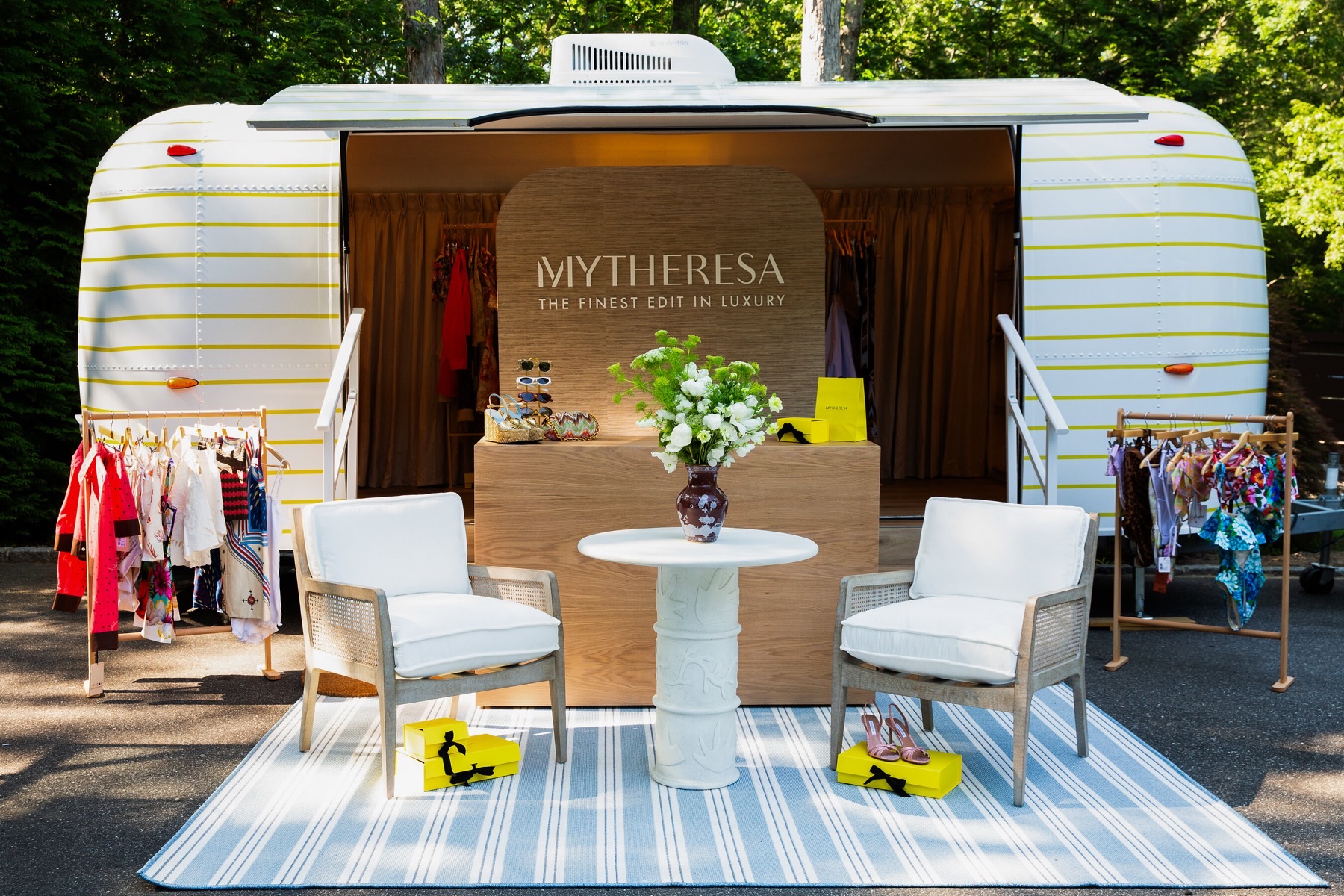
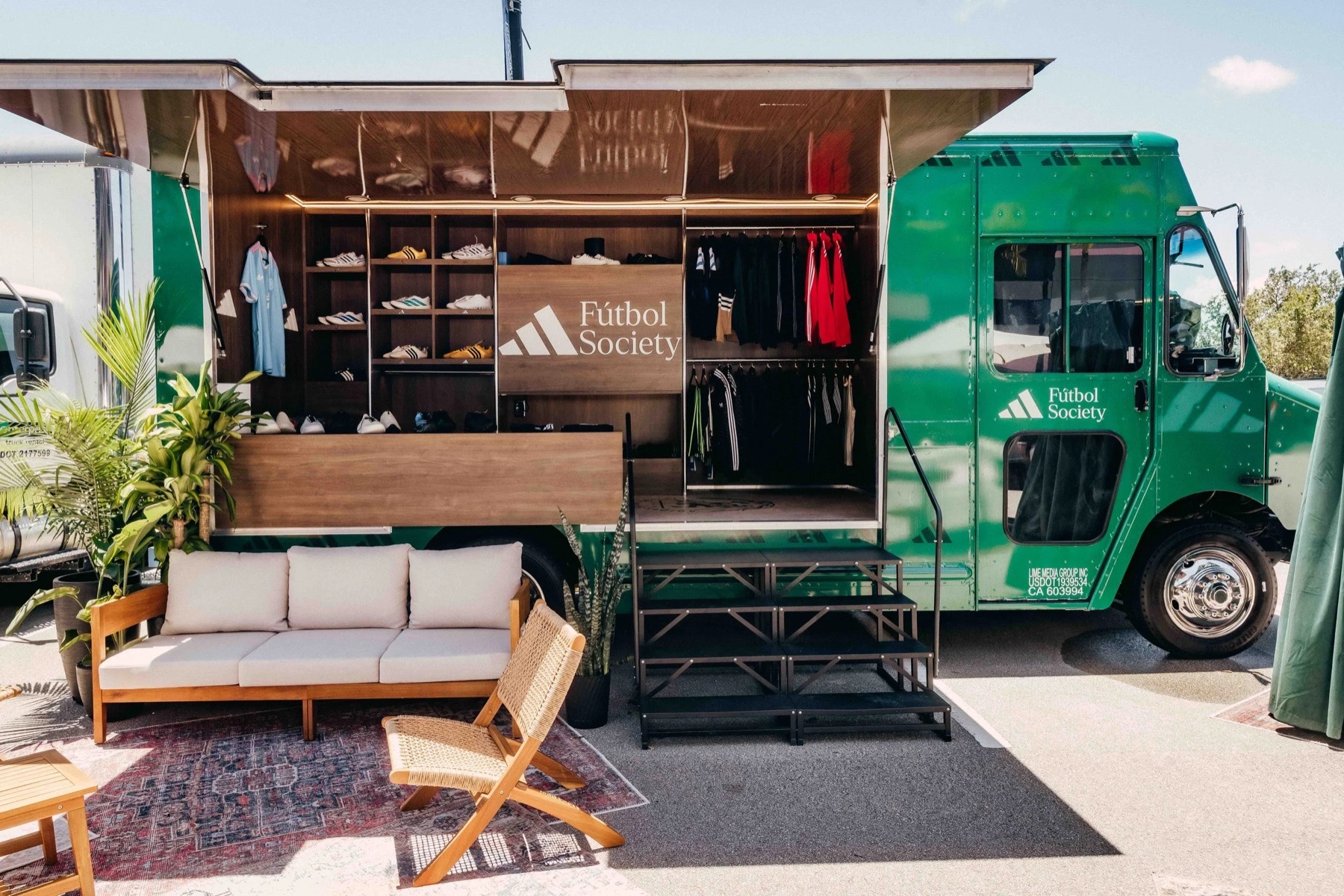
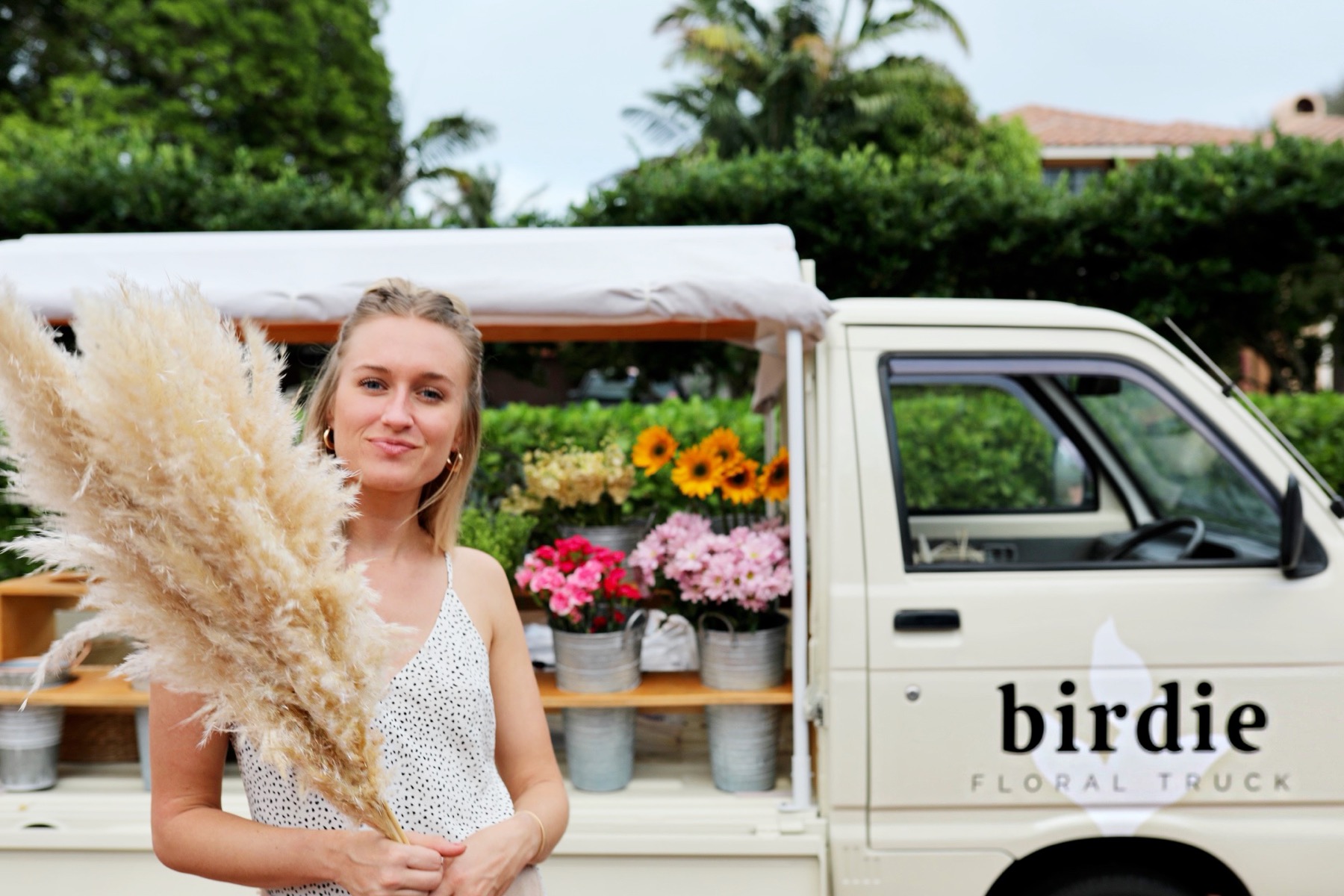
The neighborhood bookstore is back. This time it comes to you.
From a 1949 Ford in Charlotte to a pink romantasy trailer in Troy, small mobile bookstores suggest that for niche retail, a store that moves may beat a store that stays.
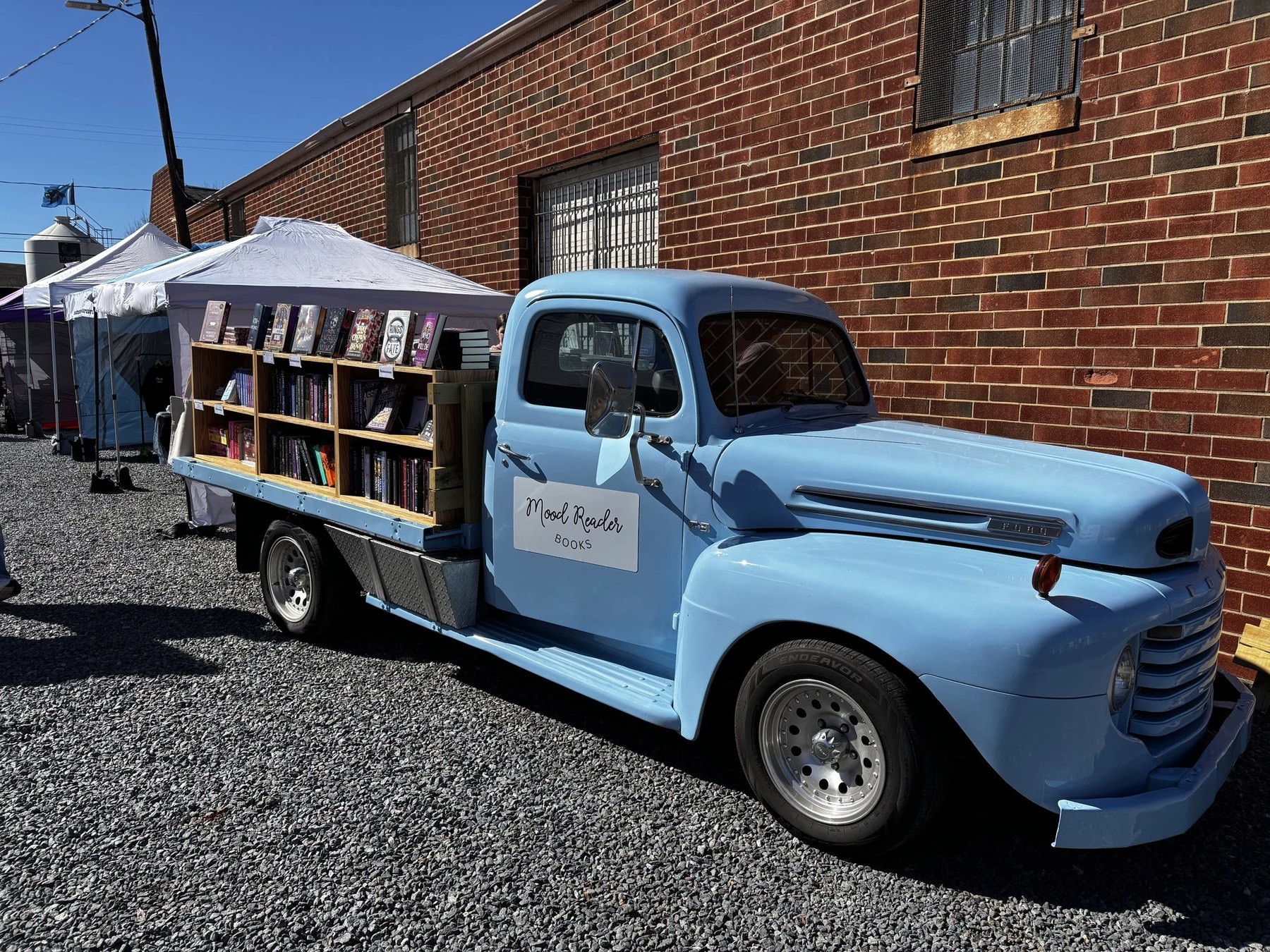
On a Saturday in Charlotte, a light blue 1949 Ford F3 pulls into a market and becomes a bookstore. The flatbed carries shelves, and the shelves carry about 200 titles, sorted by genre: fiction for all ages, new and used, some of the used ones at $6. Hannah Emme, who left a career in digital marketing to run Mood Reader Books full time, told Axios she changes what goes on the truck depending on the event. Some days call for more children's books, some for more romance.
In Troy, New York, Taylor Loccisano opens the door of a pink trailer about 10 feet long and 6 feet wide. Hers is 518 Romantasy, a bookstore built around romantasy, the fantasy-romance hybrid, along with romance, mysteries and thrillers, plus cleaner and young-adult options for readers who would rather skip the explicit scenes.
Neither shop has a storefront. Both are part of a quiet return of the neighborhood bookstore, except the neighborhood changes every few days. Taken together, they make a case worth testing: for a certain kind of retail, the small kind built on a point of view, a store that moves may simply work better than one that stays put.
The rent problem, stated plainly
The cleanest evidence for the argument comes from a store that tried it both ways. In 2023, Sonyah Spencer closed The Urban Reader Bookstore, her shop in Charlotte's University City neighborhood. She told WFAE she had been paying about $6,000 a month for the space. "I was going red every month," she said, and her other business was covering the gap.
When the 18-month lease ran out that February, she bought a white school bus and reopened as a bookmobile. Her new running costs, as she described them to WFAE: roughly $60 for gas now and then, about $100 a month for parking, and the occasional oil change.
That is the whole economic premise in one comparison. A conventional store pays rent every day, including the slow ones. A mobile store pays to show up only on the days and in the places where people are already gathered. For a business whose used books can sell for $6, that difference in fixed cost is not a detail. It can decide whether the shop survives at all.
Katie Mitchell reached the same conclusion from the other direction. When she left a corporate project-management job in 2022, she told Axios, she could not afford retail space at all. In July 2023 she found a bus on Facebook Marketplace and turned it into Trope Bookshop. By spring 2024 she was averaging three to four pop-ups a week at local businesses around town.
Small space forces a sharper store
The second argument is less obvious: a small, moving store is pushed toward specialization, and specialization is what independent retail does best.
Mitchell said it outright. Because space on the bus is limited, Axios reported, Trope focused on a single genre: romance. Loccisano made the same choice on purpose. Her trailer leans hard into romantasy; she told the Times Union that Rebecca Yarros's "Fourth Wing" rekindled her own reading, followed by Sarah J. Maas's series. "I came up with 518 Romantasy because I wanted it to be local and stay local," she told the Times Union.
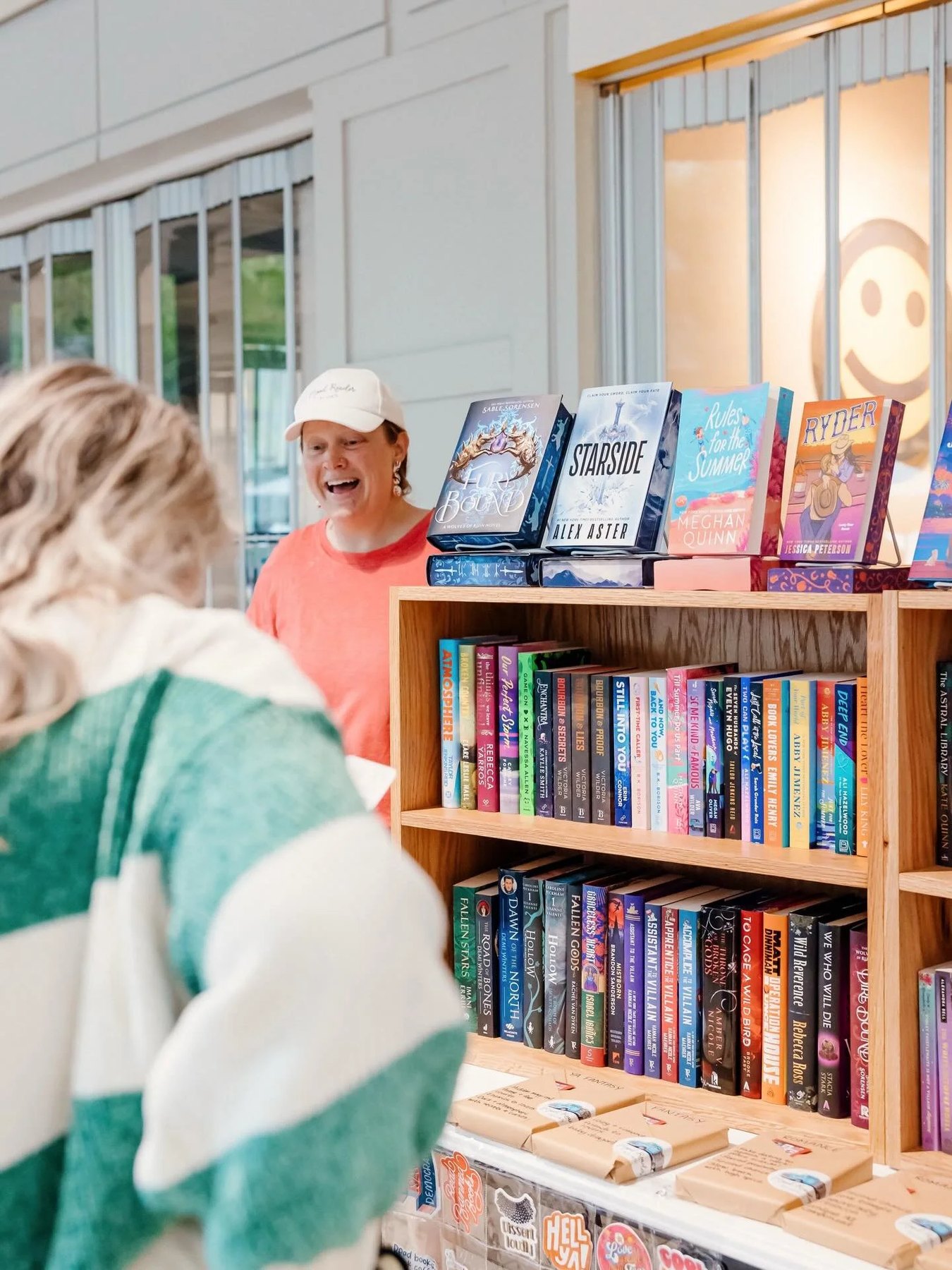
A general bookstore needs thousands of titles to feel complete. A specialist needs a few hundred and a strong opinion. On a truck bed or in a trailer of roughly 60 square feet, the opinion is the product. Emme's version is curation by occasion: around 200 titles, re-picked for each crowd. That is closer to a buyer stocking a boutique than to a bookseller filling a building.
The tactics that follow from this are telling, too. Both anchor shops run a "blind date with a book" section: the cover is hidden, and the reader chooses from a few clues. Loccisano wraps hers in paper. Emme told Axios she keeps hers at 10 to 15 titles, mostly by local independent authors. Loccisano pairs hers with annotation supplies. A blind-date shelf only works if customers trust the person who wrapped the books. It is a merchandising device built on personality, and a small mobile shop has personality to spare.
The event is the distribution channel
A storefront waits for traffic. A mobile bookstore goes to where the crowd already is. Mood Reader's October stops, listed on its website, include a Front Porch event at FreeMoreWest, a market at Lenny Boy Brewing, and Bookpalooza, a book festival at the city's minor-league ballpark. 518 Romantasy holds a standing Wednesday spot at the North Greenbush town offices, where food trucks gather, and fills the rest of its calendar with markets and festivals.
This makes the schedule the storefront. Each stop is a bet on a specific audience, and the stock can be matched to it. Trope ran a recurring partnership with a Plaza Midwood business and pop-ups at breweries, and built a monthly book club at a brewery. On its website, 518 Romantasy listed $35 tickets for an event later this month (sold out when checked), so the shop also earns money from the gathering itself, not only from the books.
There is a cost hidden here. The owner's time is spent hauling, setting up and breaking down, and a rained-out market is a lost day with no rent saved to show for it. 518 Romantasy's site says the trailer is "out on the road now til late October," which suggests the season has an end date. A store that moves also has to answer a question a storefront never does: where can customers find you in February? Loccisano's answer seems to be the web. 518 Romantasy started as an online bookstore and reader community before it had a trailer, according to its site, and the online shop is still running.
Community does the marketing
Mobile retail runs on social media, because the address changes. Mood Reader posts its schedule on Instagram, as do 518 Romantasy and Charlotte's newer trailer shop, The Wandering Page. The upside is that following a mobile shop feels like being in on something. The vehicle is the logo: a 1949 truck or a pink trailer is easier to remember, and to photograph, than another storefront in a strip center.
The shops also tend to give something away, and that builds loyalty too. Loccisano offers children's books free, one a week per child. "I don't think children should have to pay for an imagination," she told the Times Union. It is a generous policy, and it also reliably brings families back to the trailer.
When the store stops moving
The most interesting outcome is what happens when a mobile shop succeeds. Trope Bookshop opened a permanent store in Plaza Midwood in 2025, Axios reported, and has more than 52,400 Instagram followers. Mitchell had told Axios in 2024 that a storefront was the goal. The bus worked as an incubator. It tested the concept, built the audience and proved there was demand before she signed a lease.
That points to a more useful way to read the trend. "Mobile versus brick-and-mortar" is the wrong comparison. Mobile is the low-risk way to find out whether a specific, opinionated store has a market. The Wandering Page, which runs from a 12-by-6-foot cargo trailer, is run by an owner who still works full time as a product designer, according to Axios. That is the model in miniature: a store that can be tested on weekends without betting the household on a lease.
Spencer's story runs the other way. She went from storefront to bus because the storefront was costing her too much. Her explanation to WFAE covers both: "let me go to the people, so the people don't have to go to me."
What other retailers can take from it
The bookstore is a good test case because books are hard to sell at a profit. If the model holds for a product like that, it should hold for other niche retail where curation matters and the merchant's taste is the draw: vintage clothing, plants, records, stationery. The lessons carry over directly:
- Specialize until the store fits the vehicle, and treat that limit as the brand.
- Re-stock for each audience. A mobile store can change its assortment every day.
- Pick events the way a chain picks sites. The calendar is the real estate strategy.
- Keep an online shop or community open for the off-season and the days between stops.
- Treat the vehicle as a test. If the audience outgrows it, a storefront becomes a decision backed by evidence.
The industry backdrop helps. Citing American Booksellers Association data, Axios reported that the number of U.S. bookstore companies rose 70 percent between 2021 and 2025, from 2,010 to 3,416. In Charlotte alone, Axios counted at least five new bookstores opening between fall 2024 and this June. Some of them have wheels. The 1949 Ford, Emme told Axios, is simply on its retirement job.
Sources
- This vintage truck bookstore is popping up across Charlotte, Axios Charlotte (Ashley Mahoney), June 1, 2026
- Mood Reader Books, Mood Reader Books
- Mood Reader Books (@moodreaderbooks), Mood Reader Books / Instagram
- Fairies, dragons and sex: Mobile bookstore offers popular romantasy genre, Albany Times Union (Ameara Ditsche), June 20, 2026, syndicated on Yahoo
- 518 Romantasy Book Store, 518 Romantasy
- About Us, 518 Romantasy
- 518 Romantasy (@518romantasyshop), 518 Romantasy / Instagram
- Fall in love with Charlotte's romance bookstore on wheels, Axios Charlotte (Ashley Mahoney), April 15, 2024
- Charlotte's bookstore boom shows no signs of slowing, Axios Charlotte (Ashley Mahoney), July 17, 2026
- A Black-owned Charlotte bookstore reopens — on wheels, WFAE (Elvis Menayese), September 26, 2023